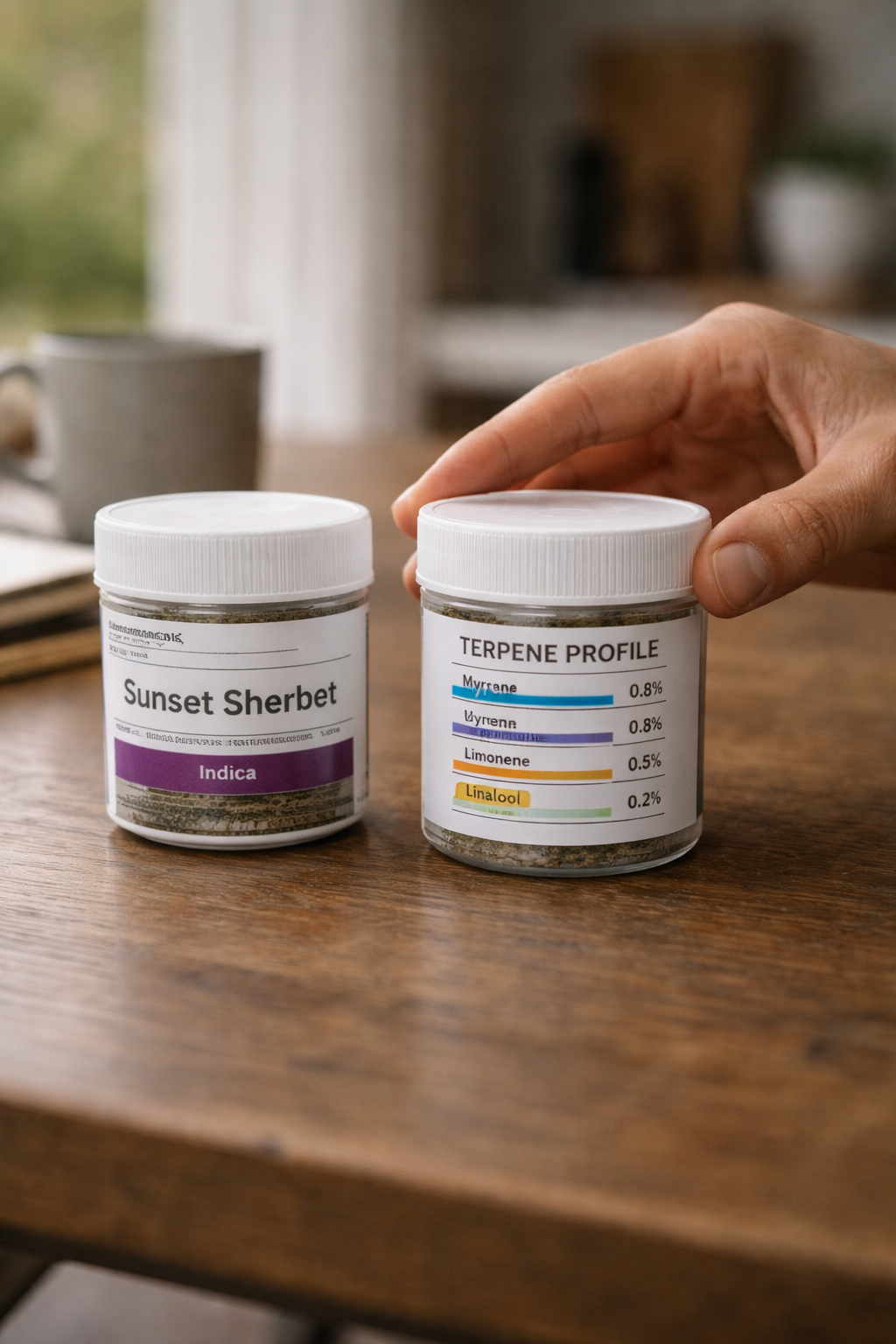
Most people learn cannabis with a simple rule early on. Indica to relax. Sativa to feel energized. Sometimes that works. Other times, it absolutely does not. You ask for something “chill” and end up mentally reorganizing your entire life, or you grab something “uplifting” and suddenly the couch feels legally binding.
That’s not you messing up. It’s the shortcut breaking down.
Indica and sativa are real terms, but they were never meant to predict your experience. Originally, they described how cannabis plants grew and where they evolved. Short and bushy versus tall and airy. Different climates. Different growth patterns. They were useful for growers, not for guaranteeing how you’d feel after consuming.
Back when landrace strains were more common, those labels lined up better. Not perfectly, but better. Landrace cannabis came from more stable genetic lines with less aggressive cross-breeding and less focus on chasing THC. Because of that, certain chemical patterns showed up more consistently, which led to loose trends in how those plants felt when consumed. That’s where the classic “indica feels heavier” and “sativa feels headier” ideas came from.
Fast forward to now, and cannabis looks very different. Most modern cannabis is deeply hybridized. Strains are crossed, re-crossed, renamed, and reintroduced constantly. Landrace strains still exist, but they’re rare in everyday legal markets. What most people encounter today are hybrids wearing familiar labels. The old correlations weakened, but the names stuck around.
The Role of Terpenes
This is where terpenes actually help bring clarity. Terpenes are natural compounds that give cannabis its smell and flavor, and they’re found all over the plant world, from citrus peels to pine trees to lavender. In cannabis, they don’t get you high on their own, but they influence how THC feels in the body and mind. Not dramatically, and not perfectly, but directionally.
Certain terpene profiles tend to feel more calming, while others feel brighter or more alert. Some lean heavier in the body, others feel lighter in the head. These patterns show up often enough that many people report similar experiences from similar terpene profiles. That’s important, because it means cannabis isn’t random. At the same time, those effects aren’t guarantees. Terpenes guide the experience, they don’t control it.
This is also why the phrase “everyone reacts totally differently” isn’t quite right. Individual biology matters, but cannabis isn’t chaos. Most people experience similar general tendencies from similar chemistry. Some people fall outside those patterns, and that’s normal. Cannabis works on probabilities, not promises.
What to Do Instead
So what do you actually do with indica and sativa now? You don’t throw them out completely, but you stop letting them make decisions for you. Think of them as a rough starting point, not a verdict. If you want more control and fewer surprises, it helps to look at the terpene profile, the THC range, how you’ve responded to similar products before, and the method you’re using. Those factors do far more work than the word on the label.
The simple takeaway is this. Indica and sativa once lined up better with effects because cannabis chemistry was more stable. Hybridization blurred that connection. Terpenes help explain why cannabis feels the way it does, but they describe tendencies, not rules. Cannabis didn’t stop making sense. We just outgrew a shortcut, and learning how to read it better gives you more control, not less.