If cannabis feels “stronger” now, it’s usually not just one thing. It’s a combo. Here’s the simplest way to think about it:
Potency experience = THC percent × how efficiently you take it × how easy it is to overshoot × how consistent it is × your context.
So even if the plant is not wildly different, the experience can be.
What the past actually looked like, average vs the legendary stuff
People mix two different histories together. On one hand, a lot of “regular” cannabis people got back then was lower potency and inconsistent. On the other hand, there were absolutely strong outliers, Thai sticks, landrace imports, early sinsemilla, that could hit hard. So the honest version is this: high-potency cannabis existed, but it wasn’t the default, and you couldn’t count on it being the same from one bag to the next.
What’s common now, and why it matters
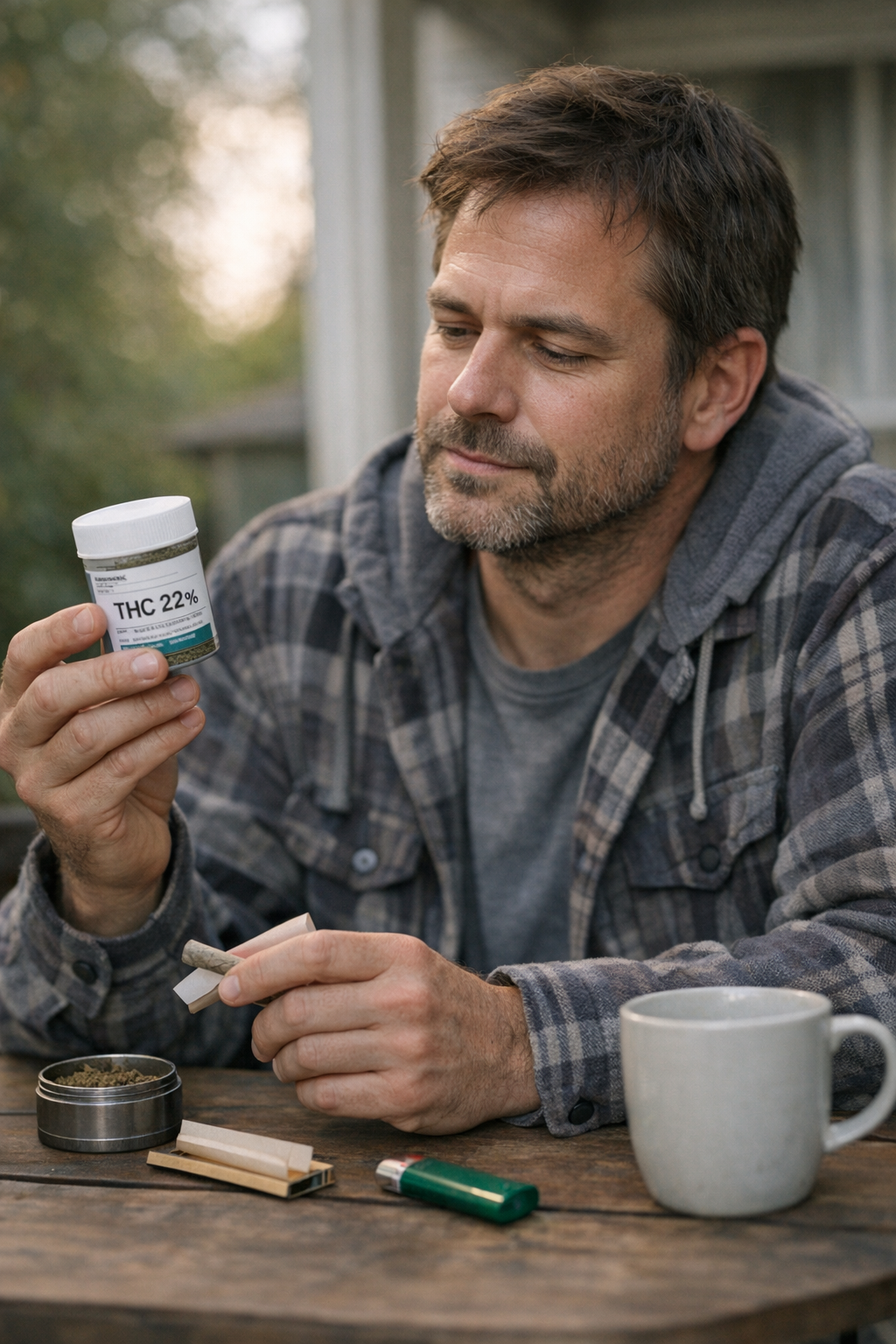
Today, strong flower is easy to find and more predictable. You can walk into a dispensary and see products labeled in the teens and 20s all day long. [Unverified] A rough “common range” you’ll see for dispensary flower is around 15 to 25% THC, with plenty above that. The point is not that everything is extreme, it’s that strong options are now the normal shelf, not the rare surprise. That changes how often people accidentally take more than they meant to.
A quick reality check about THC labels
The number on the jar is useful, but it’s not a sacred text. Testing methods vary, batches vary, and real-world products do not always match the label perfectly. [Unverified] Think of THC percent like a speed limit sign. It tells you the general situation, but you still have to drive the road you’re actually on.
Why vaping can sneak up on you
Vaping often feels “cleaner,” so people assume it’s gentler. But vaping can be more efficient than smoking, meaning more cannabinoids make it into your system with less waste. That can be great, and it also means it’s easier to overshoot without realizing it, especially if you are taking repeated small pulls.
Why edibles can feel like a different drug
Edibles are not just slower, they can be different in the body. When you eat THC, your liver turns some of it into a metabolite called 11-hydroxy-THC. That matters because 11-hydroxy-THC is strongly psychoactive and tends to last longer. This is why someone can take “only 10 mg” and still end up having a full conversation with the universe on their couch.
What tolerance is, without the lecture
Tolerance is your brain adjusting to repeated THC exposure. The short version is that frequent use can make your cannabinoid system less responsive for a while. A common way to describe it is CB1 receptor downregulation, meaning your brain turns the “volume” down because it keeps getting the same signal. The hopeful part is this: for many people, sensitivity comes back when they reduce frequency or take a break. How fast that happens depends on the person and the pattern.
A simple adaptation curve that actually helps
Daily use builds tolerance faster than weekend use, and high-dose products like concentrates can speed the whole process up because dose is so compressed. If you want to feel more with less, the lever that matters most is usually frequency, not hunting for a magical strain.
What this empowers you to do
If cannabis feels “stronger” now, it doesn’t mean you’re broken. It means the products are more consistent, the methods are more efficient, and the margin for error is smaller. The fix is not shame. The fix is better steering. Start lower than your memory says, wait longer than your impatience wants, and choose methods that match the experience you actually want.
Want to dive deeper into cannabis education and harm reduction? Check out our other articles on understanding different consumption methods and finding what works for you.